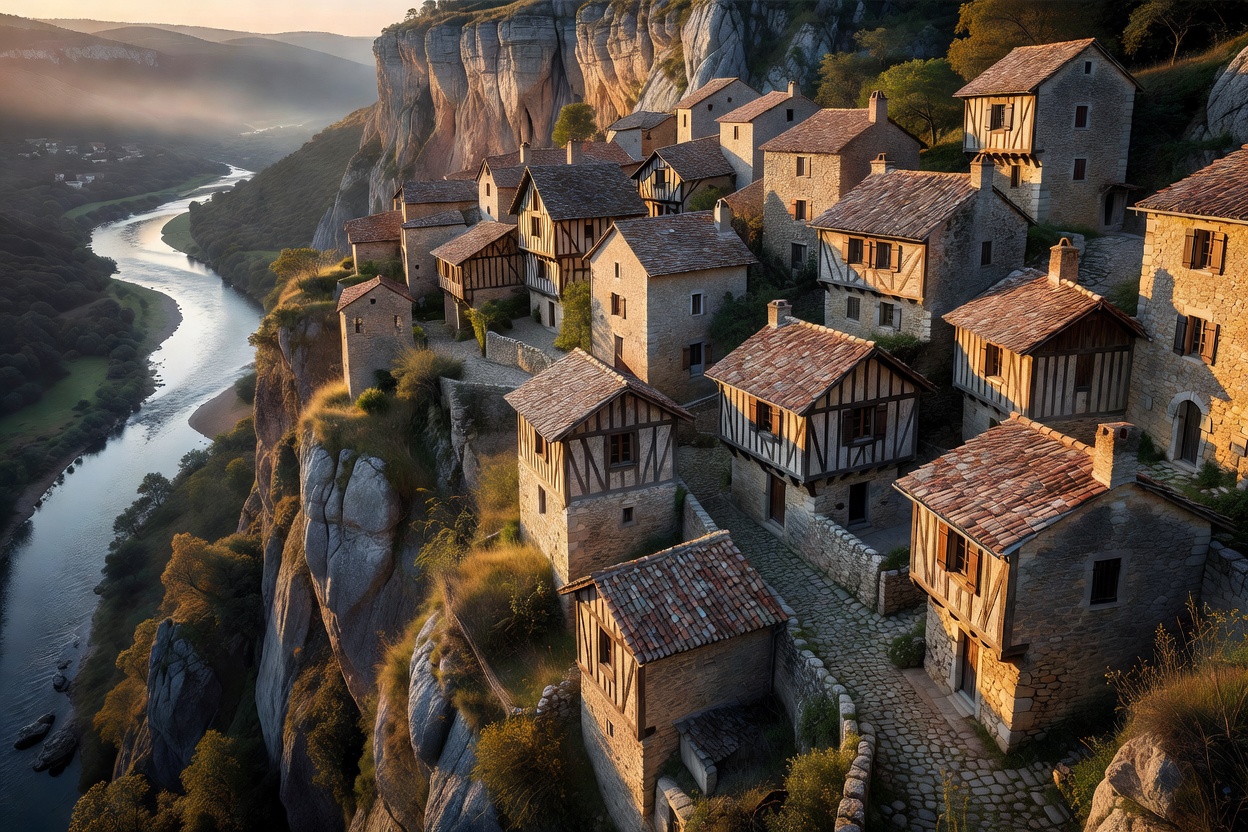
Saint-Cirq-Lapopie: Guilds & Cliff Facades
Hanging from a vertical limestone cliff above the Lot, Saint-Cirq-Lapopie features thirteen listed historical monuments. The village developed as a flourishing artisanal enclave during the 13th to 16th centuries, renowned for its woodturners (tourneurs) and leather tanners.
The vernacular style balances heavy ashlar limestone bases with delicate upper storeys of colombage (half-timbering) infilled with flat bricks and lime rubble. Steeply pitched roofs are tiled with flat terra cotta slabs known as tuiles plates, engineered to shed heavy spring river mists.
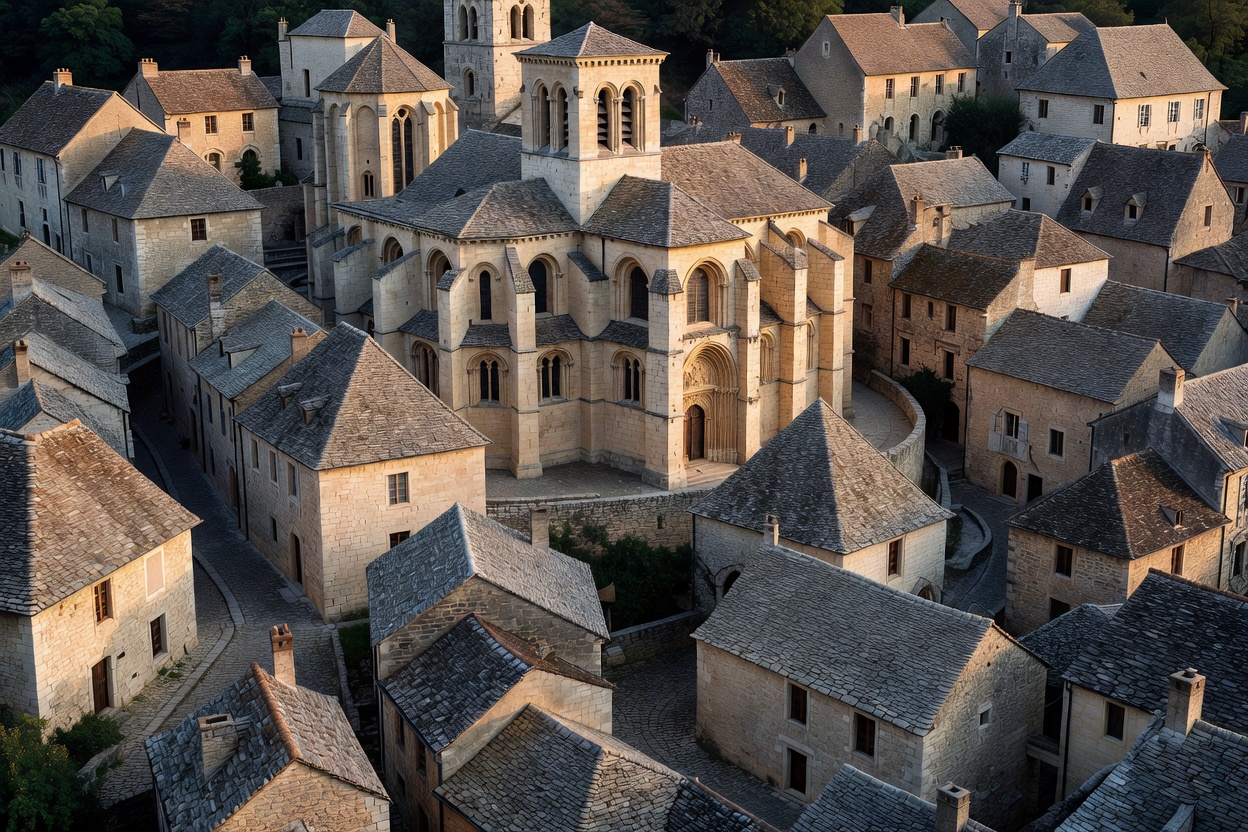
Conques: The Way of Saint James
Tucked into the rugged Ouche gorge, Conques emerged as an indispensable station on the pilgrimage road to Santiago de Compostela. At its centre stands the 11th-century Abbey-Church of Sainte-Foy, surrounded by domestic structures built entirely from native metamorphic schist.
Because schist splits naturally into uneven plates, village masons laid stones without dimensional dressings, producing thick, textured walls with exceptional thermal mass. Narrow cobbled alleys paved with rounded river stones converge in natural bowls that shelter residents from biting Atlantic winter winds.
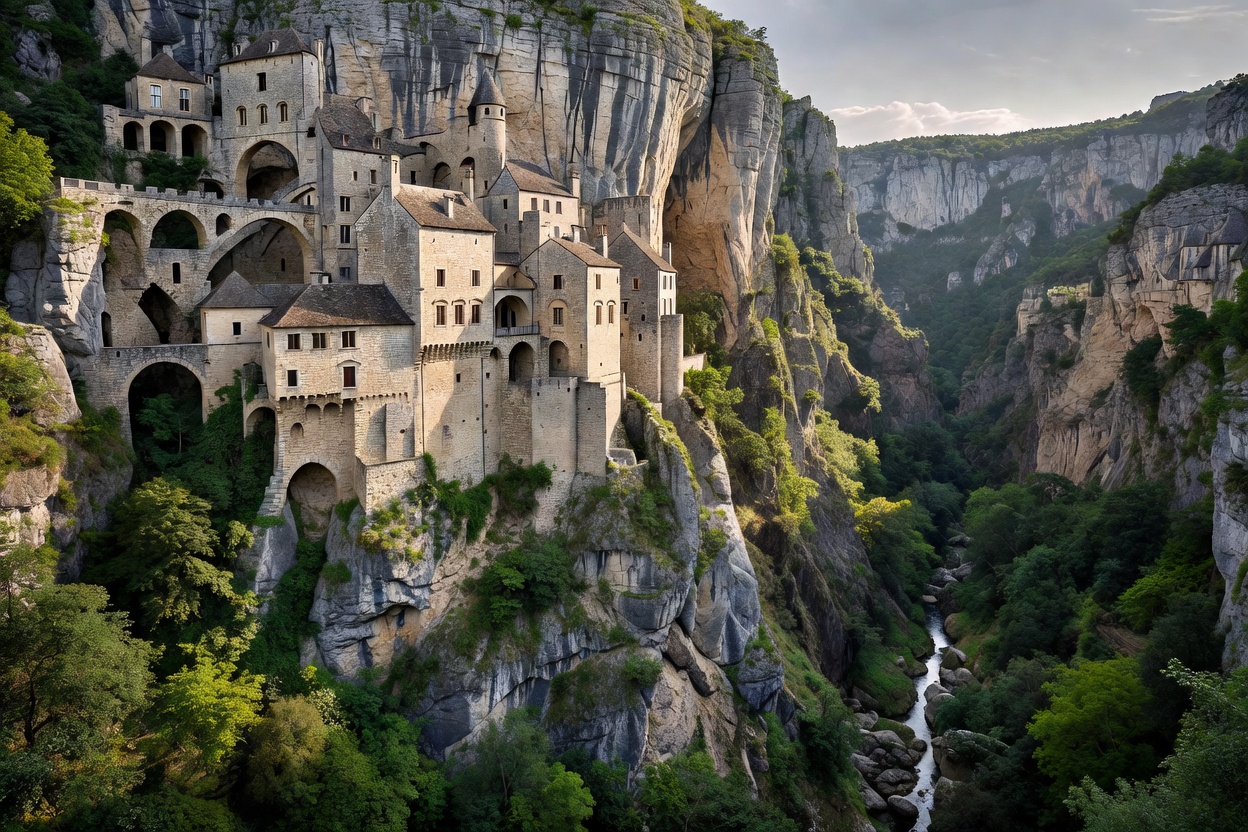
Rocamadour’s Rock-Hewn Terraces
Carved straight out of the Alzou canyon wall, Rocamadour rises 120 metres in vertical succession. Its medieval builders integrated sheer natural bedrock directly into the inner walls of chapels, monasteries, and houses.
The Grand Escalier—a ceremonial flight of 216 stone steps—serves as both circulation spine and structural retaining spine for the surrounding dwellings. Rain runoff is collected through sophisticated rock-cut cisterns, preserving life during seasonal droughts.