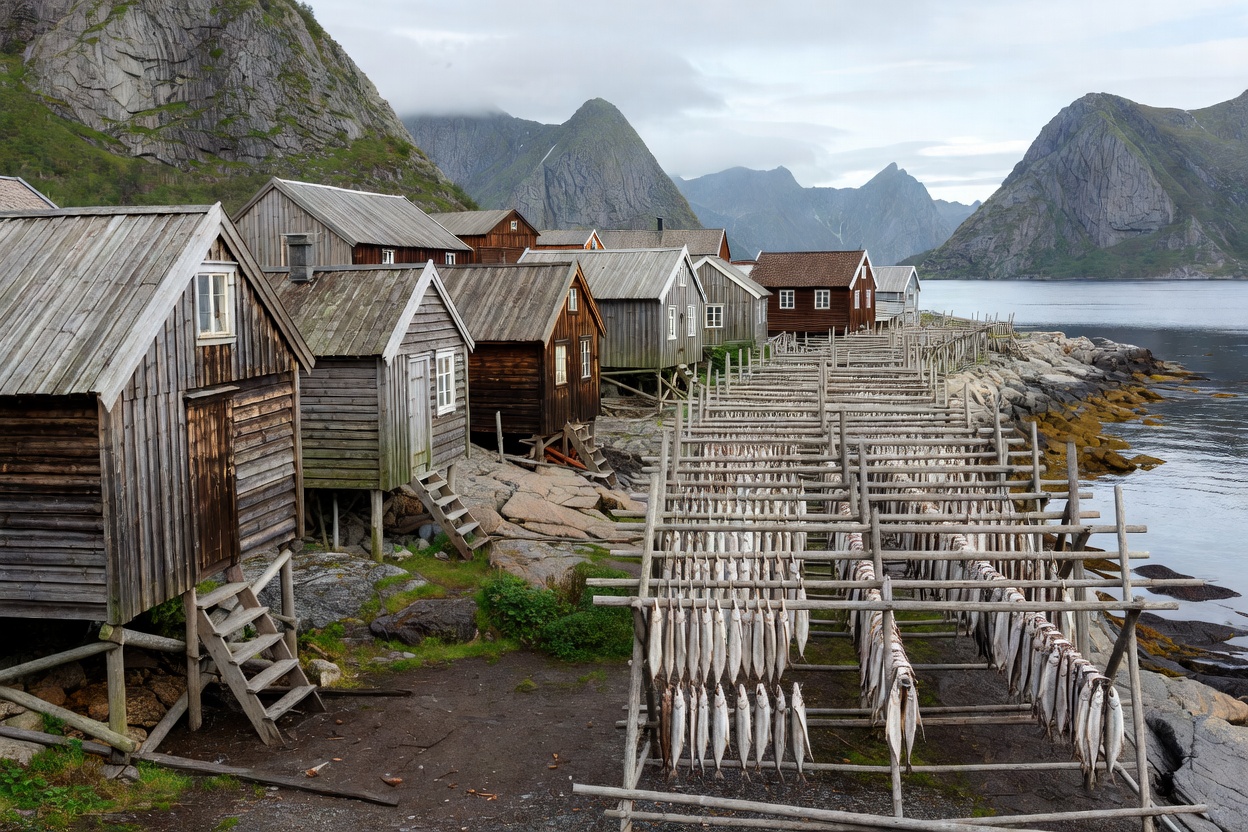
Nusfjord: The Intact Cod Fishery
Sheltered inside a narrow fjord gorge, Nusfjord was protected from open Vestfjorden gales. The village remains an exceptional living museum of 19th-century Norwegian industrial fishing architecture, featuring original salteries, smokehouses, and boat slips.
The cabins rely on massive log-cabin corners (lafteverk) notched without metallic fastenings, permitting the timber structure to expand and contract smoothly across extreme seasonal temperature swings. Pine tar boiled with charcoal guards against wood-boring marine pests.
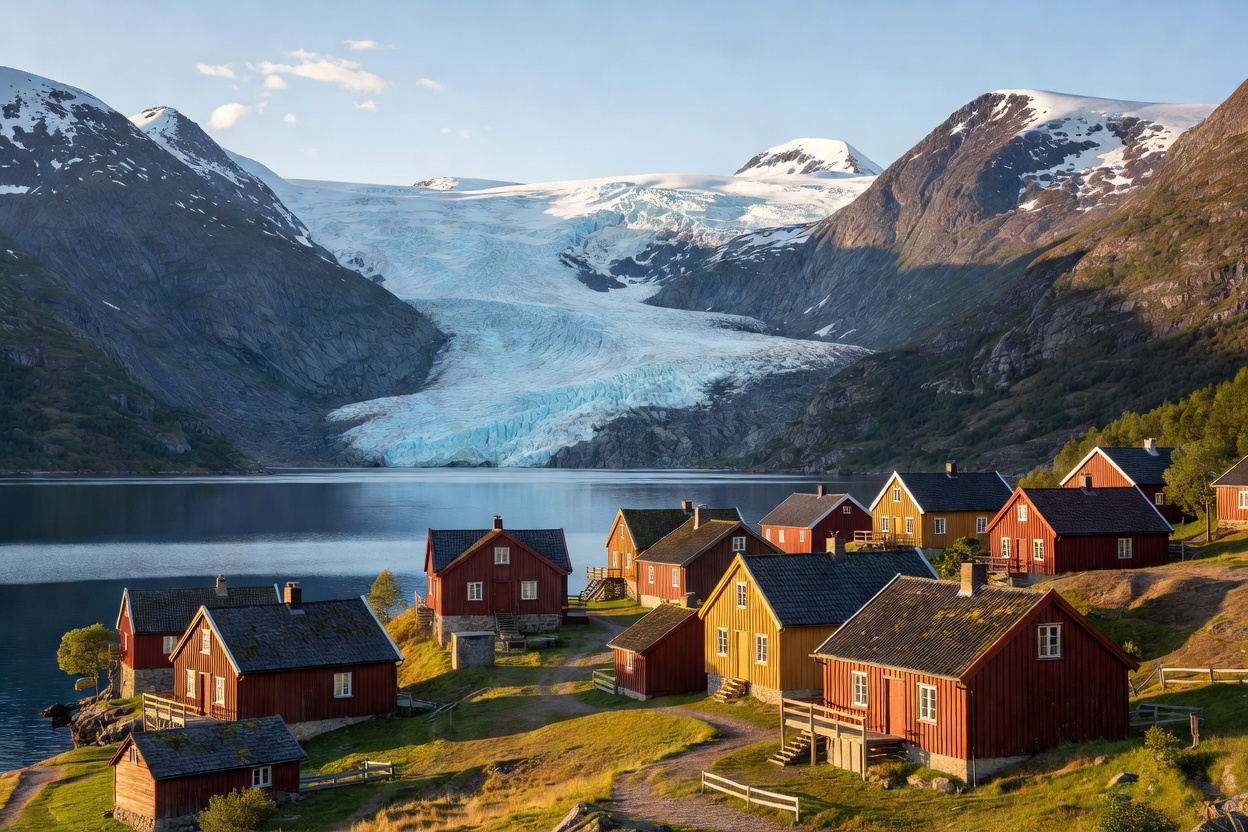
Fjærland: Birch Bark & Living Turf
Located where the emerald water of Fjærlandsfjorden meets the Jostedalsbreen glacier, Mundal hamlet preserves traditional turf roofing (torvtak). Several layers of waterproof birch bark (neve) are laid over wooden boards, weighed down by thick blocks of sod.
This living layer provides remarkable acoustic deadening against heavy subarctic rains and naturally regulates interior winter temperatures. The heavy weight of the turf compresses timber log joints, actively reducing draft infiltration over decades.
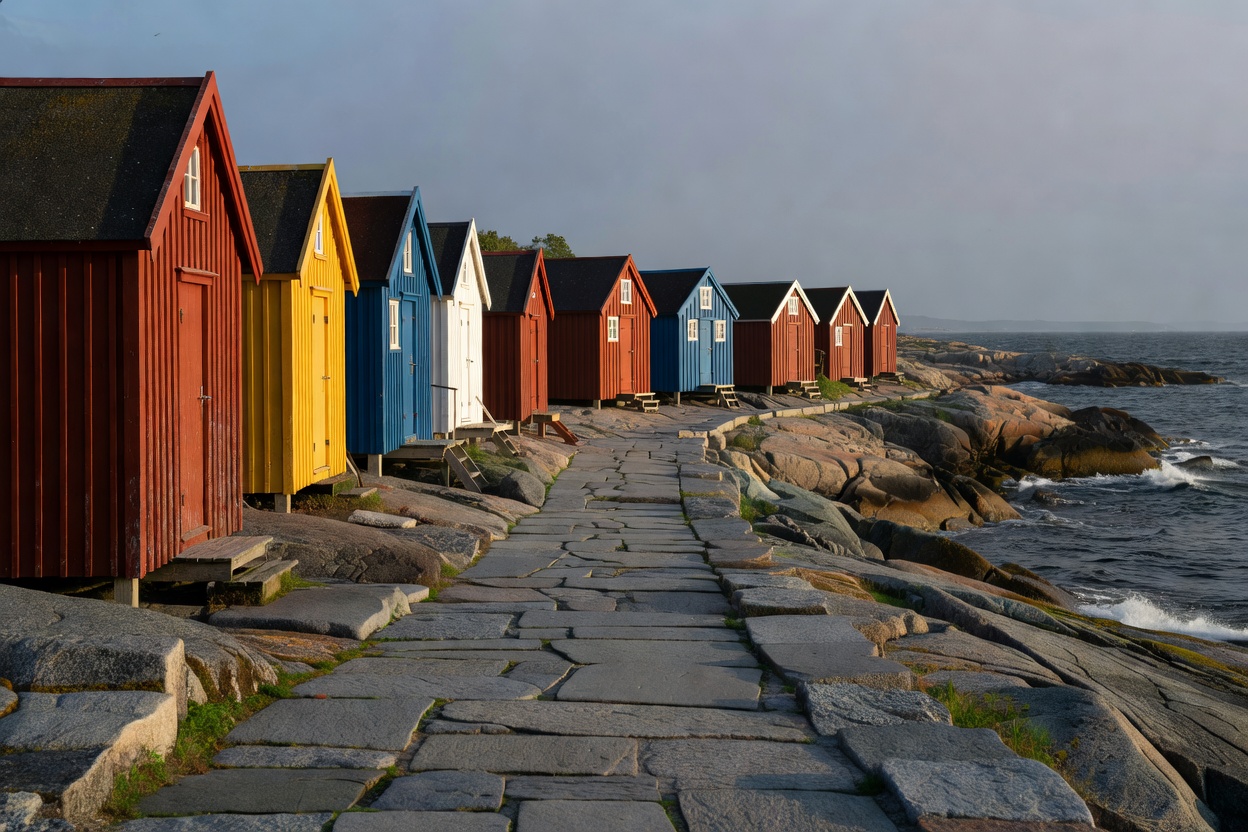
Smögen: Granite Quays & Sjöbodar
On Sweden’s Skagerrak coast, Smögen grew across ice-sculpted granite skerries. The village’s famed wooden boathouses (sjöbodar) stand atop solid dry-stone granite quays aligned directly with deep-water channels.
Protected by Falu red paint—a copper-byproduct formulation historically sourced from Falun mines—these structures endured the North Sea's salt-laden atmosphere. The timber boardwalk, resting on massive stone piers, remains a monument to Scandinavian communal engineering.