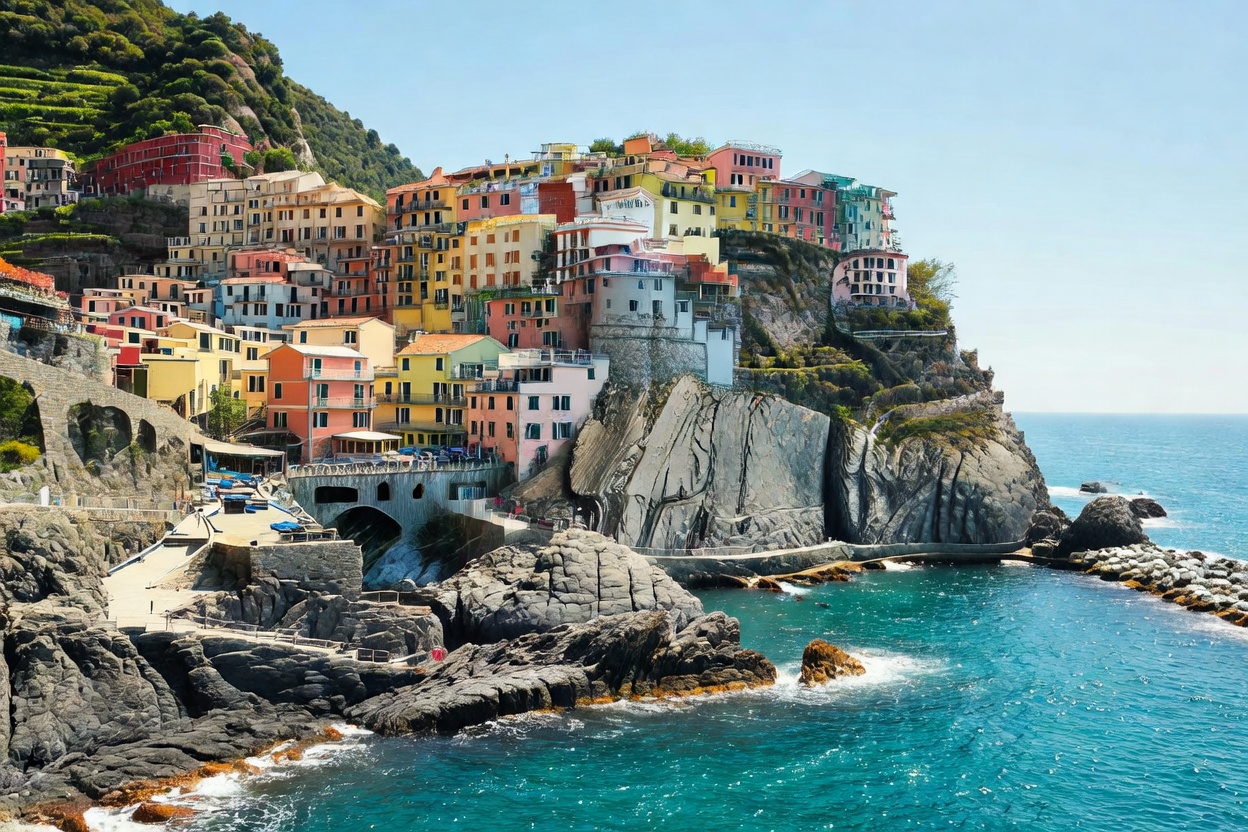
Manarola & the Vertical Carrugi
Manarola is built across a wild rocky promontory sloping toward a narrow inlet. Its primary transit axis follows the Groppo torrent, now subterranean, around which labyrinthine pedestrian alleyways (carrugi) climb steeply.
Colour coding on building facades was not originally decorative; historically, distinct mineral pigments allowed returning fishermen to identify family residences through dense sea mist. The buildings' sheer vertical profiles provide mutual shade, keeping ground-level rooms cool through intense Mediterranean summers.
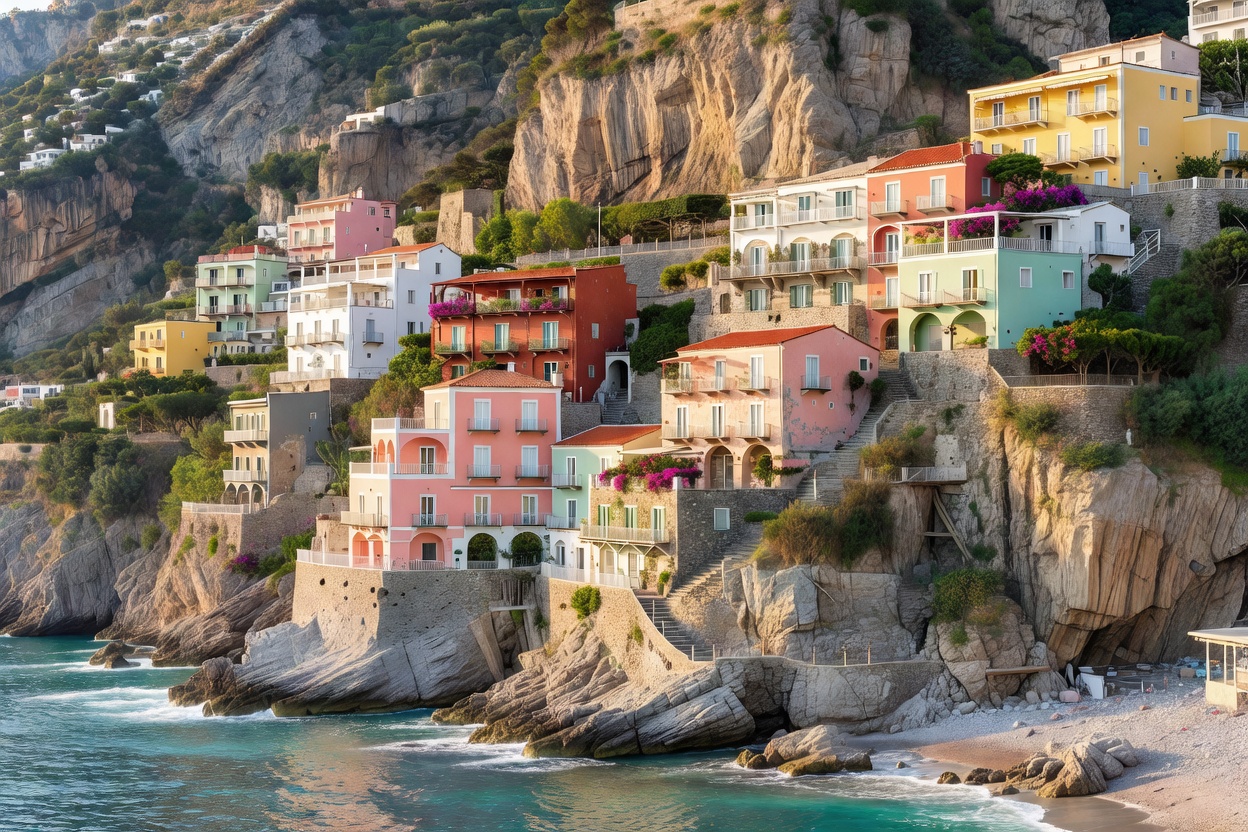
Positano: Tiered Vertical Amphitheatre
Occupying a natural amphitheatre in the Monti Lattari cliffs, Positano descends toward the Tyrrhenian Sea via thousands of stone staircases called scalinatelle. The local vernacular uses volcanic tufa stone, light enough to be erected at extreme angles without excessive foundation pressure.
A signature characteristic is the barrel-vaulted ceiling, which naturally diffuses intense heat upwards and provides reinforced structural stability against minor seismic shifts common to the Campania region.
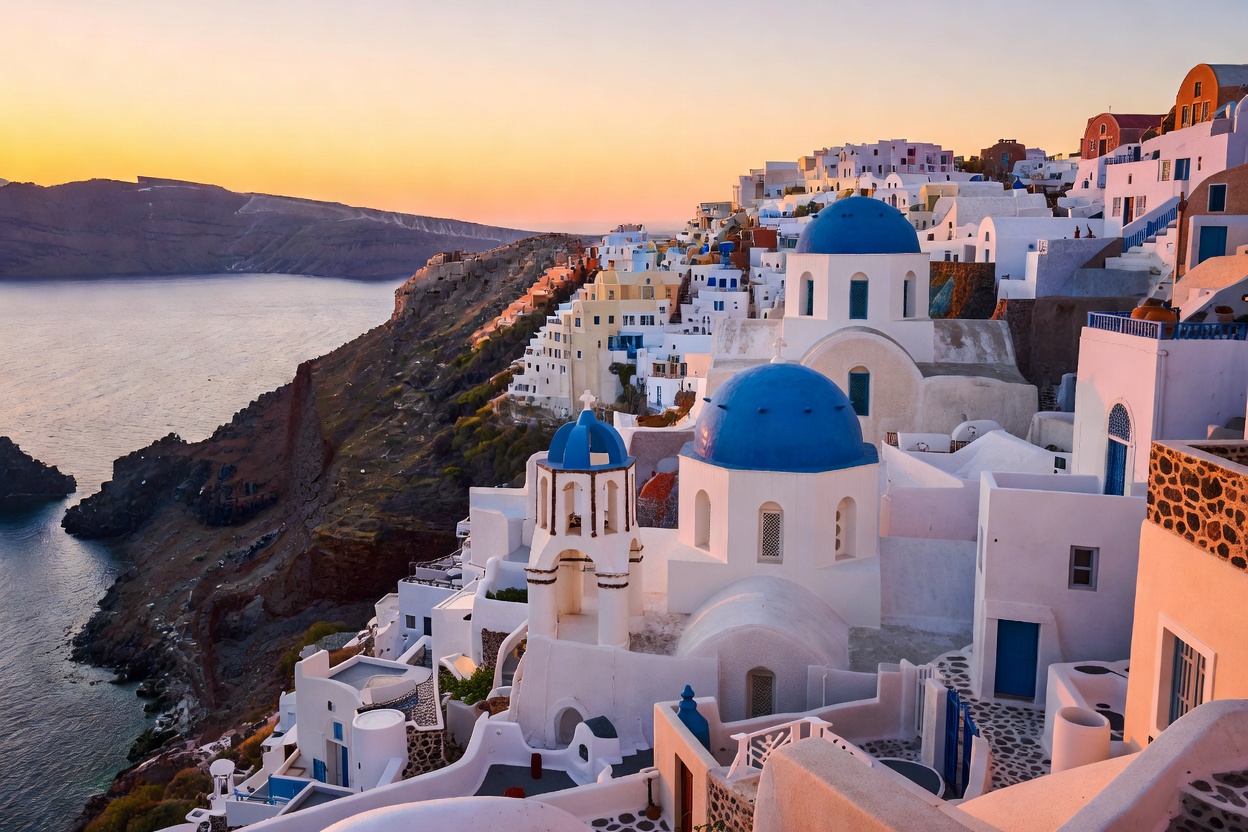
Oia: Subterranean Caldera Living
Rather than constructing outward into high winds, historic builders in Oia dug directly into the volcanic caldera face. These excavated dwellings, called yposkafa, have curved ceilings carved from pumice and volcanic ash, providing astonishing insulation against summer heat and winter storms.
Every exterior surface is treated with pure slaked lime. The glaring white reflection acts as a natural passive-cooling device, reflecting up to 90% of solar radiation, while lime’s alkaline properties sanitise surfaces and purify rainwater drained into underground cisterns.